Productivity · October 6, 2026
Workload Triage: Decide What Can Wait
Plan prioritization with a practical six-step workflow, evidence checks, implementation guidance, cautions, and a reusable review checklist.
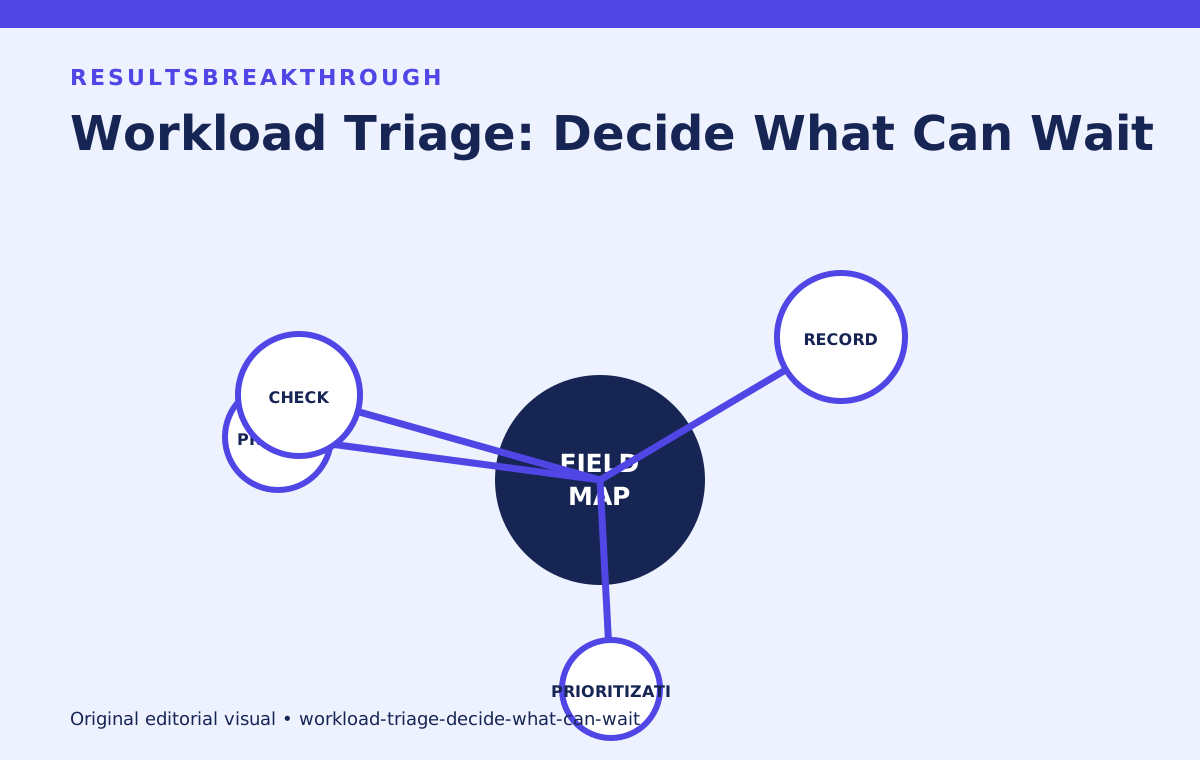
| Decision point | Evidence to check | Continue when | Stop when |
|---|---|---|---|
| Opening evidence | calendar history, completed-work evidence, workload constraints, baseline behavior, and a clearly defined result | source, date, and scope are recorded | a controlling fact is missing |
| Small test | one week or one deliberately bounded work cycle | the test represents the difficult condition | a system that adds tracking but not progress, depends on ideal motivation, or hides overloaded commitments |
| Owner | the person who can change the commitment or environment | one person can stop or escalate the work | ownership is assumed but not named |
| Completion record | cue, action, duration, completion evidence, interruption, result, and one design adjustment | the next reviewer can repeat the decision | the result depends on memory |
Start here
Treat prioritization as a field procedure rather than a collection of tips. The procedure should still work when the day is busy, the easy option is unavailable, or another person takes over. A useful productivity system converts an important result into a small observable behavior that survives a normal week.
Use this guide when a concrete workload triage: decide what can wait decision is already on the table. It focuses on the sequence, evidence, and recovery path—not on claiming that one answer fits every material, person, location, organization, or appetite.
At a glance: six checkpoints for prioritization
1. Define three observable outcomes. 2. Use recent evidence to estimate effort. 3. Protect focused work on the calendar. 4. Assign communication and interruption rules. 5. Capture completion evidence. 6. Review the week and change one design variable.
Read the list once before acting. Mark the checkpoint with the weakest evidence. That is where the plan needs attention; later refinement cannot rescue a decision built on an unresolved early constraint.
Define the result and the stop rule
Describe the result in observable terms. Include the person, object, or business process affected; the real environment; the acceptable range; and the point at which the work must stop. For prioritization, an unacceptable outcome includes a system that adds tracking but not progress, depends on ideal motivation, or hides overloaded commitments.
Separate hard constraints from preferences. A hard constraint can disqualify the method even when it is faster or cheaper. Write assumptions as assumptions, attach an owner, and give high-consequence unknowns a deadline for resolution.
Prepare with evidence that can change the decision
Before scheduling the work, assemble calendar history, completed-work evidence, workload constraints, baseline behavior, and a clearly defined result. Ask which single missing fact could reverse the decision. Resolve that item first; lower-impact questions can remain in the test log.
Set up the workspace and communication path before the demanding step. Define three observable outcomes; then confirm that use recent evidence to estimate effort. Make the stop authority explicit. The person who notices a problem should not need to negotiate permission while the exposure or failure is growing.
The complete walkthrough
1. Define three observable outcomes.
Document the starting condition before you define three observable outcomes. Without a baseline, the team may notice change but cannot judge whether it is acceptable. The baseline for prioritization should be brief, observable, and saved with cue, action, duration, completion evidence, interruption, result, and one design adjustment.
Checkpoint: before moving to “use recent evidence to estimate effort,” write one sentence describing what passed, what did not, and who owns the unresolved item.
2. Use recent evidence to estimate effort.
Do not treat “use recent evidence to estimate effort” as a box to tick. Explain what the step protects and what evidence will prove it worked. Capture cue, action, duration, completion evidence, interruption, result, and one design adjustment, then compare the observation with the stated result. Continue only when the evidence supports the next checkpoint.
Checkpoint: before moving to “protect focused work on the calendar,” write one sentence describing what passed, what did not, and who owns the unresolved item.
3. Protect focused work on the calendar.
Start by turning “protect focused work on the calendar” into a fact someone can verify. Use calendar history, completed-work evidence, workload constraints, baseline behavior, and a clearly defined result. Write the source and date beside the conclusion; otherwise the team cannot distinguish evidence from memory. For prioritization, this checkpoint is complete only when the next operator knows what is confirmed and what remains unknown.
Checkpoint: before moving to “assign communication and interruption rules,” write one sentence describing what passed, what did not, and who owns the unresolved item.
4. Assign communication and interruption rules.
For this checkpoint, assign communication and interruption rules. Observe the real condition rather than the ideal one. A practical record includes cue, action, duration, completion evidence, interruption, result, and one design adjustment. If one of those details is unavailable, note the consequence of guessing before continuing.
Checkpoint: before moving to “capture completion evidence,” write one sentence describing what passed, what did not, and who owns the unresolved item.
5. Capture completion evidence.
For this checkpoint, capture completion evidence. Observe the real condition rather than the ideal one. A practical record includes cue, action, duration, completion evidence, interruption, result, and one design adjustment. If one of those details is unavailable, note the consequence of guessing before continuing.
Checkpoint: before moving to “review the week and change one design variable,” write one sentence describing what passed, what did not, and who owns the unresolved item.
6. Review the week and change one design variable.
Before performing this step, say the plan aloud: review the week and change one design variable. Name the expected change, the maximum exposure or effort, and the stop signal. This short briefing matters because prioritization can drift when people improvise without noticing that the original conditions changed.
Checkpoint: before moving to “schedule the next inspection or review,” write one sentence describing what passed, what did not, and who owns the unresolved item.
Run one representative small test
Do not launch the whole plan as the experiment. Trial one week or one deliberately bounded work cycle, observe without coaching the result toward success, and stop when a system that adds tracking but not progress, depends on ideal motivation, or hides overloaded commitments is present. A bounded failure is useful evidence.
Keep the test honest. Do not add help, favorable conditions, or expert intervention that will be absent during normal use. If the difficult case cannot be tested responsibly, escalate it to the qualified person or authority who can evaluate it.
Five mistakes that weaken a prioritization plan
- Choosing a tool, product, setting, contract form, or template before the prioritization requirement is defined. - Testing only the easiest condition and assuming the result represents normal prioritization use. - Changing several variables together, which hides the cause of success or failure. - Continuing after a system that adds tracking but not progress, depends on ideal motivation, or hides overloaded commitments because time or money has already been invested. - Finishing the visible task without recording cue, action, duration, completion evidence, interruption, result, and one design adjustment.
When a mistake appears, stabilize first. Protect the person, material, rights, equipment, food, environment, or client experience involved. Return to the first checkpoint contradicted by the evidence, revise one variable, and create a new stop rule before trying again.
Safety, permission, and professional boundaries
This is an implementation framework, not medical or mental-health treatment. Reduce the workload when the system creates sustained distress, and seek qualified support when health or disability affects execution.
Authoritative starting points:
- CDC shared-goals worksheet - NIH behavior-change overview[1] [2]
Confirm that a source applies to the exact model, jurisdiction, land manager, product category, transaction, clinical situation, or activity. Save the access date and pair general guidance with current manufacturer instructions or individualized professional advice when appropriate.
Review the result and make it reusable
Close the work with a short audit owned by the person who can change the commitment or environment. Preserve cue, action, duration, completion evidence, interruption, result, and one design adjustment. That record is the starting point for maintenance, training, renewal, or the next controlled test.
Turn the final note into a short checklist for the next person. Include the six checkpoints, the approved range, a photograph or example where useful, the stop rule, and the escalation contact. A workflow is not delegated until another person can recognize both a good result and a reason to stop.
Your next 20 minutes
Write the desired result and the unacceptable outcome. Complete checkpoint one using a current source or direct observation. Then prepare one week or one deliberately bounded work cycle. If the critical evidence is missing, use the time to send one precise question instead of improvising.
The goal of this short session is not to finish prioritization. It is to reach the first defensible action with the stop rule already in place.
Related practical guides
- 14-day productivity experiment - weekly review template - results resource library
FAQ
What should be verified first?.
Verify the fact that could disqualify the entire approach. In this workflow that usually means define three observable outcomes, followed by a check that you can use recent evidence to estimate effort under real conditions.
How detailed should the written plan be?.
Detailed enough that another capable person can perform the next checkpoint and recognize a system that adds tracking but not progress, depends on ideal motivation, or hides overloaded commitments. For most situations, one page plus the controlling sources and cue, action, duration, completion evidence, interruption, result, and one design adjustment is more useful than a long narrative.
When is a small test not appropriate?.
Skip informal testing when a recall, emergency, legal restriction, clinical concern, structural question, food-safety uncertainty, unknown hazardous material, or manufacturer prohibition requires an authoritative response first.
What evidence should be saved afterward?.
Save cue, action, duration, completion evidence, interruption, result, and one design adjustment. Add the source date, the person who approved the result, and the date or trigger for the next review.
What if the first attempt fails?.
Stop, protect the affected people and property, and preserve the evidence. Identify the earliest failed checkpoint, change one variable, and decide whether a second bounded test or qualified professional review is the responsible next step.
Recommended Next Step
Compare tool picks that fit this topic.

Full Focus Planner
Best structured quarterly execution planner
A premium paper planner built around quarterly goals, weekly priorities, daily big-three planning, and reflection.

Clever Fox Planner Pro
Best all-in-one planning and habit tracking option
A popular undated planner with goal-setting pages, weekly layouts, habit tracking, priorities, and reflection prompts.

Rocketbook Fusion Smart Reusable Notebook
Best reusable notebook for digital capture
A reusable notebook that blends handwritten thinking with cloud capture for meeting notes, project plans, and weekly check-ins.
Quick answers
What should I compare before acting on "Workload Triage: Decide What Can Wait"?
Compare the workflow fit, fit notes, installation requirements, current version, included hardware, product specifications, and whether the product matches your workflow and desk setup.
Should I buy from the article image alone?
No. Use the article to narrow the right product category, then open the buying guide and retailer listing to confirm current specs, edition, compatibility, seller details, and return policy.
What is the smartest first step before buying?
Confirm the product category fits your work style, workspace, budget, and implementation cadence, then check manufacturer documentation and retailer details before purchase.
Related Guides
Read Next
Turn a Productivity Book Into a 14-Day Experiment
A practical guide to turn a productivity book into a 14-day experiment, with clear decisions, cautions, and next steps.
Read articleBest Book for Productivity Overall
Best Book for Productivity Overall: a practical, evidence-aware guide with implementation steps, decision criteria, cautions, and a reusable checklist for be...
Read article5 Books Everyone Should Read
5 Books Everyone Should Read: a practical, evidence-aware guide with implementation steps, decision criteria, cautions, and a reusable checklist for best pro...
Read article